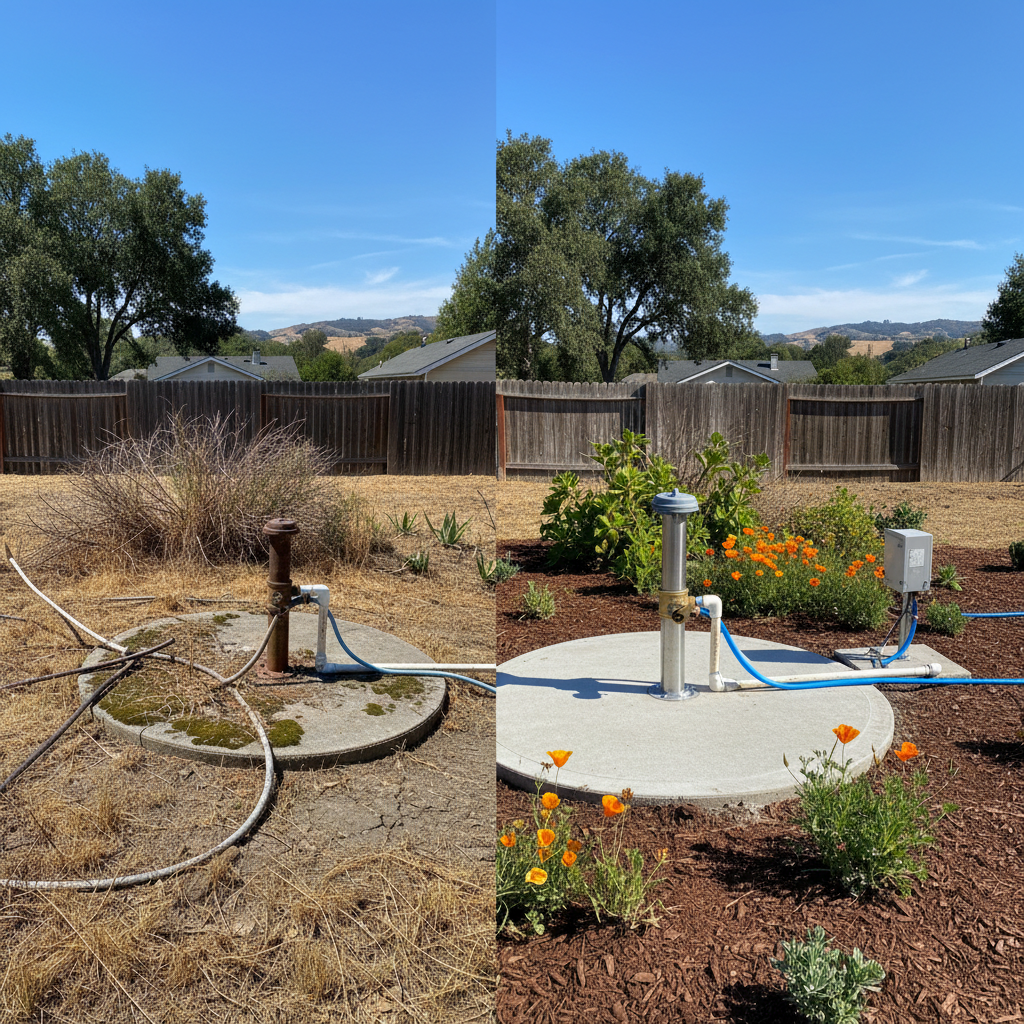
So, your well casing's seen better days, huh? It's a common issue, especially with older wells around Fair Oaks and the surrounding areas. Maybe you're noticing sediment in your water, or your pump's acting funny, or perhaps a routine inspection flagged a crack or corrosion. Whatever the reason, you're probably weighing your options for repair, and two big ones come up: a well liner or a well sleeve. Let's talk about what each one means for your water supply and your wallet.
What's the Deal with a Well Liner?
Think of a well liner as basically giving your old well a brand-new, smaller well inside it. We're talking about a new section of pipe, usually PVC or steel, that gets installed down the existing casing. It's a pretty robust solution. When we put in a liner, we're essentially creating a new, sealed pathway for your water, bypassing any cracks or corrosion in the original casing.
Here's what I've seen with liners:
- Durability: They're built to last. Once installed, a good liner can extend the life of your well for decades. You're getting a fresh start, in a way.
- Water Quality: Because you're sealing off the old, compromised casing, you'll often see a big improvement in water quality. Less sediment, less chance of surface contaminants getting in through cracks.
- Cost: This is where liners can get pricey. It's a more involved process, requiring specialized equipment and a good amount of time. You're paying for that long-term solution and the labor that goes into it.
- Well Diameter: This is important. A liner will reduce the internal diameter of your well. For most residential wells, it's not a huge deal, but it's something to be aware of, as it might slightly affect pump size or flow rates down the line.
- Installation: It's not a quick fix. We're talking about a significant project that can take a few days, depending on the well's depth and condition.
And What About a Well Sleeve?
A well sleeve is more like a patch job, but a really good, targeted patch. Instead of lining the whole casing, a sleeve is a shorter section of pipe that's designed to cover and seal a specific damaged area. It's often made of steel or a strong composite material and is expanded or cemented into place to create a watertight seal over the crack or hole.
Here's the rundown on sleeves:
- Targeted Repair: If you've got a localized crack or a single corroded spot, a sleeve can be a perfect fit. You're only fixing what's broken, not the whole thing.
- Cost: Generally, sleeves are less expensive than full liners. You're using less material and the installation can be quicker, especially for shallower damage.
- Durability: A well-installed sleeve is very durable for the specific area it covers. However, it doesn't address potential future problems in other parts of the casing. If your casing is generally old and deteriorating, a sleeve might just be kicking the can down the road.
- Well Diameter: Like a liner, it will slightly reduce the diameter at the repair point, but since it's a shorter section, the overall impact is usually minimal.
- Installation: Often quicker than a full liner, which can mean less downtime for your water supply.
Which One Should You Choose for Your Fair Oaks Home?
This is the million-dollar question, and honestly, it depends on what we find when we inspect your well. For homes in areas like the bluffs near the American River, where soil conditions can vary wildly and sometimes lead to casing stress, we see a mix of problems.
If your well casing has widespread corrosion, multiple cracks, or if it's just really old and showing its age, a liner is usually the smarter long-term investment. You're getting a comprehensive fix that gives you peace of mind for decades. It's more money upfront, but it prevents you from chasing problem after problem with individual sleeves.
However, if your well is relatively new, and we find a single, isolated crack or a specific point of damage that isn't indicative of overall casing failure, then a sleeve can be an excellent, cost-effective solution. It fixes the immediate problem without the higher cost and effort of a full liner.
At Aim High Well Drilling, we'll always recommend a thorough inspection first. We'll get a camera down there, see exactly what's going on, and then walk you through the best options for your specific situation. Don't guess when it comes to your water supply; let's get it right the first time.