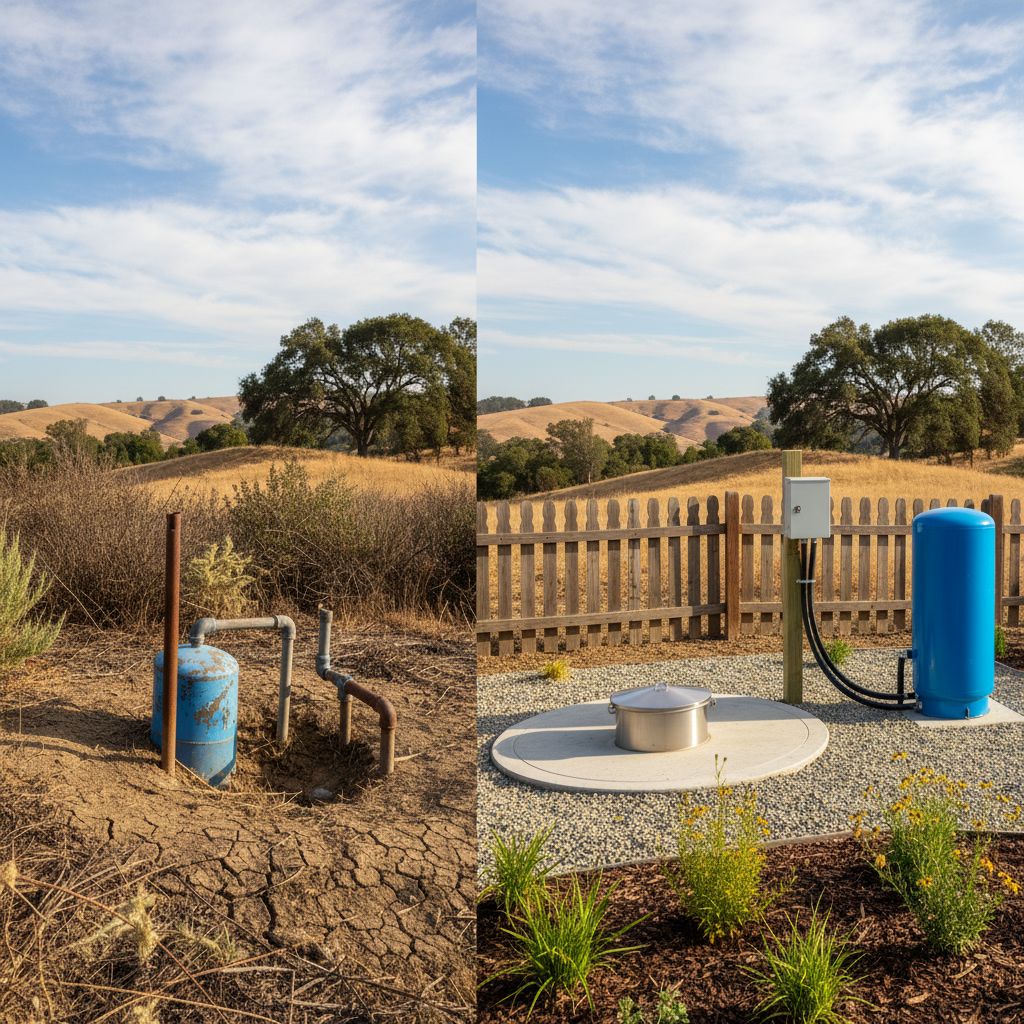
Alright, let's talk well pumps. If you're looking at a new well or replacing an old pump here in Fair Oaks, you've probably heard about submersible pumps and jet pumps. People often ask me which one's better, and honestly, there's no single 'best' answer for everyone. It really depends on your specific situation. But I can tell you what I've seen work best for most folks around here, especially with our deeper wells and those clay soils.
What's the Big Difference?
Think of it like this: a submersible pump lives down in the well, under the water. It pushes the water up to your house. A jet pump, on the other hand, sits above ground, usually in a pump house or your garage. It pulls the water up. That fundamental difference drives pretty much everything else we're going to talk about.
Cost: Upfront vs. Long-Term
When you're first looking at prices, jet pumps often seem cheaper to buy and install. The pump itself is usually less expensive, and since it's above ground, the installation can be a bit simpler, at least initially. You don't need specialized equipment to lower it into the well or pull it out for service.
Submersible pumps, though, can cost more upfront. The pump itself might be pricier, and getting it down into the well and wired up correctly takes more specialized tools and know-how. But here's where the long-term comes in: because they're submerged, they're naturally cooled by the water, which can extend their lifespan significantly. They're also generally more energy-efficient, especially for deeper wells, because they're pushing water rather than pulling it against gravity and friction.
Durability and Lifespan
This is where submersible pumps really shine, especially in our Fair Oaks environment. Being underwater protects them from the elements – rain, sun, freezing temperatures (though we don't get too many of those here, it's still a factor). They're also less susceptible to wear and tear from running dry if your well water level drops temporarily, assuming they're installed with proper low-water cutoff protection. I've seen submersibles last 15-20 years, sometimes even longer, with good maintenance.
Jet pumps, being above ground, are exposed. They can be affected by heat, cold, and general wear from being in a less controlled environment. They also have more moving parts exposed to air, like impellers and diffusers, which can wear out faster. Their average lifespan is typically 8-12 years. If you've got one, you'll want to make sure it's properly housed to protect it from the elements, especially during those scorching Fair Oaks summers.
Maintenance and Repairs
Maintenance for both types generally involves checking pressure tanks, electrical connections, and ensuring proper operation. But when it comes to repairs, the location makes a huge difference.
- Jet Pump: Since it's above ground, troubleshooting and repairs are usually easier and quicker. If something goes wrong, I can often get to it, diagnose the issue, and fix it without pulling anything out of the well. This often means lower labor costs for repairs.
- Submersible Pump: If a submersible pump needs significant repair or replacement, it means pulling the entire pump, motor, and pipe assembly out of the well. This requires a well rig and specialized tools. It's a bigger job, takes more time, and naturally, costs more in labor. However, because they're built to last and are protected, they often need less frequent intervention.
Noise and Appearance
This is a pretty straightforward comparison.
- Jet Pump: They're above ground, and they can be noisy. You'll hear them kick on. If it's in your garage or a pump house near your living space, that noise can be a real bother. You also have the physical pump and associated piping visible, which might not be ideal if you're particular about your yard's aesthetics.
- Submersible Pump: They're silent. Completely. The pump is deep underground, so you won't hear a thing when it's running. All you'll see above ground is the well cap, which is usually pretty discreet. For most homeowners, this is a huge plus, especially in quiet neighborhoods like those older, tree-lined streets near Fair Oaks Village.
My Recommendation for Fair Oaks Homeowners
Given the typical well depths we see around Fair Oaks – often 100 feet or more – and the desire for reliable, quiet, and long-lasting water systems, I almost always lean towards a submersible pump installation for new wells or major replacements. They're built for deeper water tables, they're more efficient, incredibly durable, and you won't even know it's there until you turn on the tap.
Yes, the initial cost might be a bit higher, but for most folks, the long-term savings on energy, the extended lifespan, and the peace and quiet make it well worth the investment. With Aim High Well Drilling, we've got the experience and the right equipment to get your submersible pump installed perfectly, ensuring you have reliable water for years to come.
That said, if you have a very shallow well (under 25 feet), or if budget is the absolute primary concern and you're okay with a bit more noise and potentially shorter lifespan, a jet pump can still be a viable option. But for the majority of wells I work on in this area, submersible is the way to go.